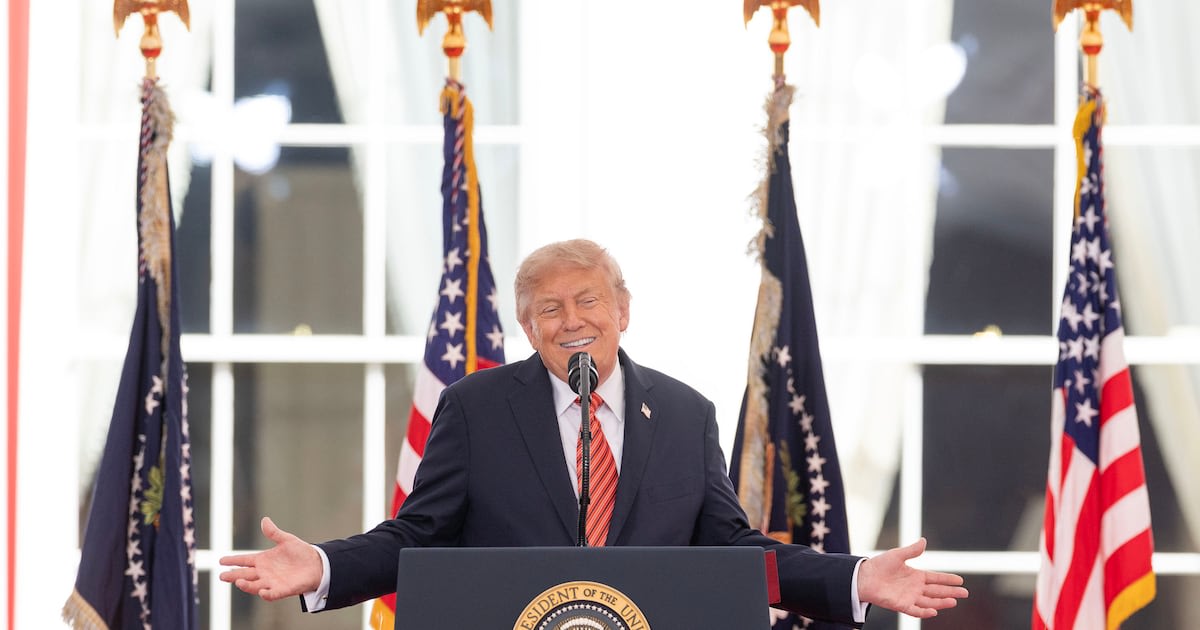
Have you ever stepped into a room where the energy felt completely electric, disorienting, and impossible to predict? Picture an ambassador’s residence filled with corporate titans in tailored suits, beauty queens, and Irish dance legend Michael Flatley. Now, imagine the auditory landscape shifting abruptly from the infectious disco groove of the Village People’s “YMCA” to the theatrical dread of Michael Jackson’s “Thriller,” followed immediately by the chilling toll of a gong from The Undertaker’s iconic WWE entrance theme. This surreal backdrop set the stage for Donald Trump’s characteristically meandering morning address, creating a sensory environment that leaves observers fascinated.
While political commentators dissect the rhetoric and sociologists evaluate the guest list, there is a fascinating behavioral science story unfolding beneath the surface. How do eclectic atmospheres, jarring musical juxtapositions, and free-form oratory alter human perception, emotional contagion, and social focus? Looking closely at this unique morning in diplomatic quarters reveals surprising truths about public gatherings, sensory priming, and group dynamics.
The Auditory Paradox: From Disco Anthems to Wrestling Drama
Sound is one of the fastest direct routes to the human nervous system. When planning major events, organizers typically curate subtle ambient tracks designed to calm nerves and encourage polite, measured conversation. However, the intentional clash of “YMCA,” “Thriller,” and a professional wrestling entrance march bypasses traditional social decorum, instantly shifting the autonomic nervous system into high arousal.
Nostalgic hits like “YMCA” stimulate the brain’s reward pathways, releasing dopamine through predictable rhythms and universally recognized social memories. In sharp contrast, The Undertaker’s theme—famous for its slow, mournful bell toll and heavy synth progressions—is engineered specifically to generate suspense, quiet tension, and heightened anticipation. Pairing theatrical dread with feel-good pop creates cognitive dissonance, a psychological state that commands total sensory focus from everyone in the room.
An Eclectic Room: Corporate Titans, Pageant Winners, and Cultural Icons
The guest profile at the ambassador’s residence presented an equally dramatic study in human sociology. Having corporate titans rub shoulders with pageant royalty and performance figures like Michael Flatley represents a classic collision of disparate social spheres. In typical settings, these groups operate within vastly distinct professional frameworks and behavioral codes.
When individuals from drastically different subcultures converge, standard social scripts quickly evaporate. High-status corporate executives accustomed to predictable boardrooms find themselves sharing space with theatrical luminaries and pageant figures, fostering a unique vulnerability. In behavioral psychology, this dynamic creates an environment ripe for “emotional contagion,” where individual skepticism lowers and the collective crowd reacts as a unified, highly impressionable entity.
The Psychology of the Meandering Narrative
Public speaking traditions favor structured, linear delivery: an introduction, clear evidentiary points, and a neat conclusion. Yet Donald Trump’s addresses are famous for defying these conventions, opting instead for winding, conversational paths that drift across anecdotes, personal grievances, humor, and off-the-cuff observations.
From a cognitive standpoint, a strictly linear speech allows the listener’s mind to predict what comes next, which frequently invites mental wandering or analytical critique. Conversely, a meandering narrative functions similarly to a high-variability podcast or impromptu storytelling session. Because the audience cannot forecast where the speaker will pivot next, cognitive attention stays tethered to the speaker. Listeners lean in, awaiting the next punchline, digression, or unexpected observation.
Why Unstructured Oration Captivates Modern Audiences
- The Illusion of Intimacy: Free-associative speaking mimics casual, private conversation, subtly breaking down the formal boundary between speaker and listener.
- Heightened Anticipation: When listeners cannot anticipate the next sentence, dopamine spikes in response to unpredictable conversational payoffs.
- Disarming Authenticity: In an era dominated by hyper-polished corporate public relations, unscripted wandering feels refreshingly authentic to many observers, regardless of the subject matter.
Navigating Sensory Overload in Public Spaces
While spectacles like this morning address are engineered to command maximum attention, prolonged exposure to high-stimulation environments takes a physiological toll. Loud, erratic auditory cues coupled with sudden shifts in narrative tone keep the human sympathetic nervous system on high alert, potentially leading to mental exhaustion once the spectacle concludes.
Understanding these psychological triggers empowers attendees and observers to maintain grounding during high-intensity social or corporate gatherings. Whether you find yourself in an ambassador’s grand salon or an energetic business seminar, recognizing how sound, variety, and rhetoric are used helps you preserve critical perspective.
Key Takeaways for Managing High-Energy Gatherings
- Observe Sensory Anchors: Pay attention to the background music and ambient cues around you; organizers often utilize nostalgia and tempo changes to subtly direct your emotional state.
- Recognize Emotional Contagion: When surrounded by diverse, enthusiastic crowds, pause periodically to check in with your own baseline mood and energy levels.
- Analyze the Rhetoric: Differentiate between linear informational communication and wandering, high-engagement storytelling designed primarily to maintain audience focus.
- Prioritize Post-Event Decompression: After leaving intense environments characterized by sensory surprises, allow your nervous system time to recalibrate through quiet rest and hydration.
The curious morning at the ambassador’s residence—complete with WWE theme music, disco classics, international dance legends, and winding speeches—serves as a masterclass in the theater of public life. By unpacking the underlying science of sensory input, narrative flow, and group psychology, we gain a clearer understanding of why unconventional spectacles continue to hold such an enduring grip on human attention.
Source Attribution: Article content originally reported by Jack Horgan-Jones. Read original story coverage on Jack Horgan-Jones →